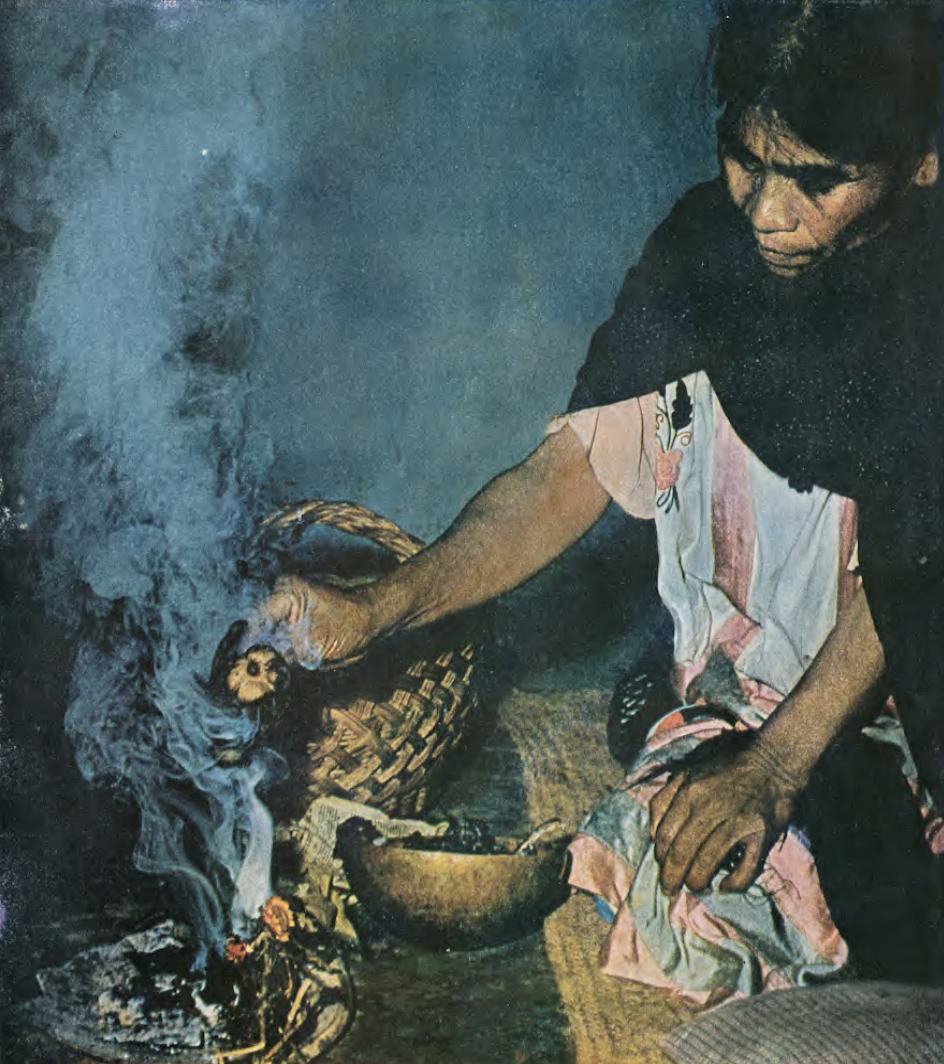
On February 13, 1957, Life magazine published a 15-page article detailing, experientially, Wasson’s first experiences with the shamaness Maria Sabina. The fantastic style of the text, coupled with Richardson’s extraordinary photographs ushered in, with one fell swoop, the age of psychedelics -High Times
In Deep Gratitude
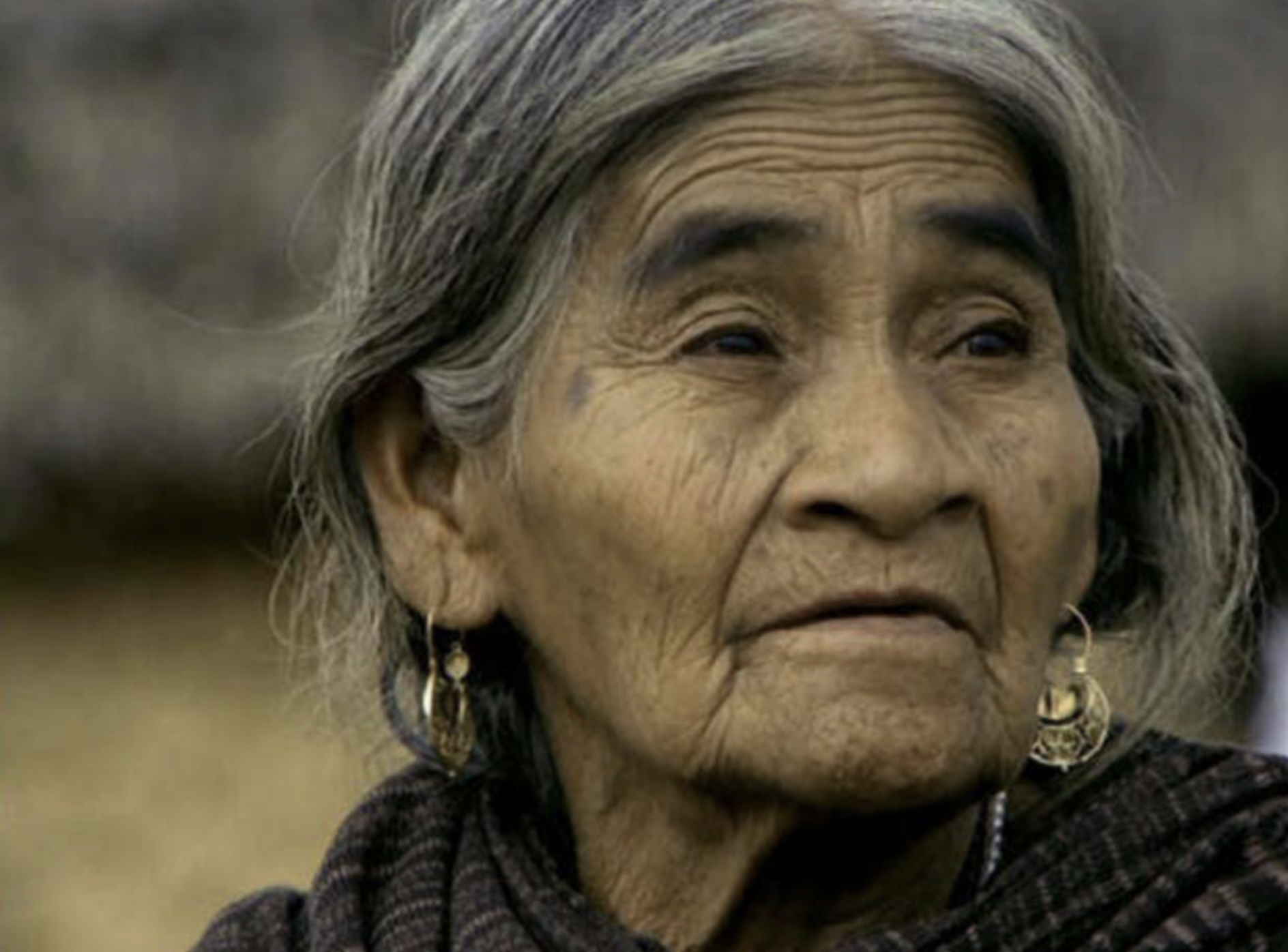
In the mountains of Oaxaca, among the mist-covered ridges of the Sierra Mazateca, lived a woman whose life would quietly alter the spiritual and psychological landscape of the modern world.Her name was María Sabina.Born in 1894 in Huautla de Jiménez, María Sabina was a Mazatec curandera, healer, poet, and ceremonial guide whose relationship with the sacred psilocybin mushrooms—known as los niños santos, the holy little children—became legendary far beyond her homeland.Yet despite the mythology that later surrounded her, María herself remained deeply humble. She did not seek fame, recognition, or influence. Her work emerged from devotion, prayer, healing, and service to her people.
The Little Children
As a young girl, María Sabina first encountered the mushrooms while wandering through the hills near her village. According to her accounts, the mushrooms spoke to her—not metaphorically, but as living presences carrying intelligence, guidance, and healing.Over time, she came to understand them as sacred medicines capable of revealing hidden truths, diagnosing illness, and opening access to spiritual insight.“The more you go inside the world of teonanácatl,” she once said, “the more things are seen.”For María, the mushrooms were never recreational substances. They were sacrament, prayer, and doorway. They belonged to a sacred cosmology rooted in the traditions of the Mazatec people.
The Veladas
María Sabina became known for conducting veladas—night-long healing ceremonies involving prayer, chanting, tobacco smoke, and sacred mushrooms.These ceremonies were not performances. They were acts of spiritual healing.During the veladas, María entered profound states of consciousness through the mushrooms and used chant, rhythm, and spoken prayer to guide the process. Her words flowed with a kind of spontaneous poetic force that later captivated anthropologists, writers, musicians, and seekers from around the world.Her chants often carried an almost mythic cadence:
“I am the woman who looks inside.”
“I am the woman of the stars.”
“I am the woman who heals.”And yet her work was never about self-aggrandizement. She saw herself as serving the sacred—not as possessing it.
The Arrival of the West
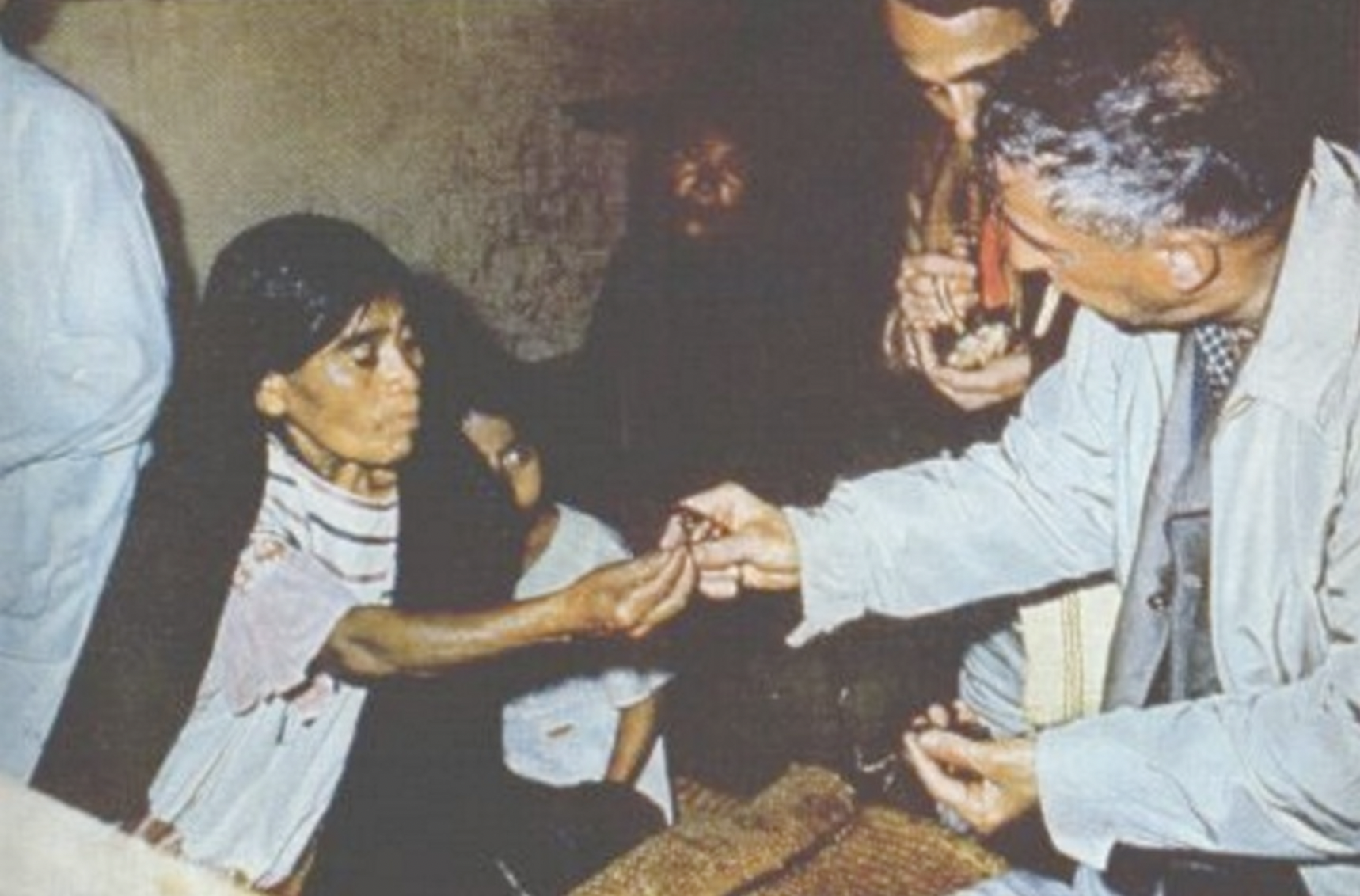
For generations, these ceremonies remained largely unknown outside the Mazatec region.That changed in the 1950s when banker and ethnomycologist R. Gordon Wasson traveled to Huautla and participated in María Sabina’s velada. His later article in Life magazine introduced psilocybin mushrooms to the Western world and ignited enormous interest in psychedelics.Soon, outsiders began arriving in large numbers.Scientists, artists, musicians, spiritual seekers, hippies, and curious travelers flooded into Huautla de Jiménez searching for mystical experience and visionary insight. Rumors spread that even members of The Beatles had become fascinated by María Sabina and the sacred mushrooms.But the influx came with consequences.The ceremonies were removed from their cultural and spiritual context. The quiet mountain village was overwhelmed. Local traditions were disrupted. María Sabina herself faced criticism, persecution, and hardship within her own community.What the Western world often interpreted as discovery had, for the Mazatec people, been sacred knowledge all along.
Poet, Healer, Visionary
One of the most remarkable aspects of María Sabina’s legacy was her spontaneous poetic expression.Her language moved beyond ordinary speech into something incantatory, visionary, and deeply symbolic. Scholars and poets later recognized the extraordinary quality of her chants, with some describing her as one of the great visionary voices of Latin America.Yet her poetry did not emerge from literary ambition. It emerged from ceremony.The words arose through the experience itself—through prayer, trance, healing, and communion with what she understood as sacred intelligence.She once described another realm existing alongside our own:
“There is a world beyond ours, a world that is far away, nearby and invisible.”For María Sabina, that invisible world was not abstraction. It was lived reality.
A Complicated Legacy
Today, María Sabina is often remembered as one of the central figures in the modern psychedelic movement. Yet her relationship with that movement was deeply complicated.She opened a doorway that transformed countless lives and influenced modern research into psilocybin, trauma, consciousness, depression, and spiritual experience. In many ways, contemporary psychedelic science stands downstream from traditions that Indigenous communities had carried for centuries.And yet María herself paid a heavy price for that opening.Her life reminds us that sacred traditions cannot be separated from the cultures, histories, and people who carry them. It also reminds us that healing, spirituality, and altered states of consciousness require humility, reverence, and ethical responsibility.
In Deep Gratitude
Every now and then, I find myself returning inwardly to María Sabina with deep gratitude.Not simply because she helped introduce the sacred mushrooms to the wider world, but because of the spirit in which she carried her work—with devotion, humility, prayer, courage, and service.She was not merely a psychedelic icon.
She was a healer.
A poet.
A bridge between worlds.And perhaps most importantly, she reminds us that these medicines were never solely about altered states or extraordinary experiences. At their deepest level, they were—and remain—about healing, relationship, reverence, and communion with something larger than ourselves.Her legacy continues to ripple outward through modern psychedelic therapy, spiritual exploration, and the growing recognition that healing involves far more than symptom reduction alone.For all she carried, all she preserved, and all she revealed—thank you, María Sabina.
"Heal yourself with the light of the sun and the rays of the moon. With the sun of the river and the waterfall. With the swing of the sea and the fluttering of birds. Heal yourself with mint, name, and eucalyptus. Sweetened with lavender, rosemary and chamomile. Hug yourself with the cacao bean and a hint of cinnamon. Put love in tea instead of sugar and drink it looking at the stars. Heal yourself with the kisses that the wind gives you and the hugs of the rain. Stand strong with your bare feet on the ground and with everything that comes it. Be smarter every day by listening to your intuition, looking at the world with your forehead. Jump, dance, sing, so that you live happier. Heal yourself, with beautiful love, and always remember… You are the medicine."
-Maria Sabina
Written by Sergio Nikita Lialin
Sergio Lialin is the author of Healing the Modern Soul and a guide working at the intersection of psychedelic healing, psychology, spirituality, and human transformation.
For more than 30 years, his work has woven together Indigenous wisdom traditions from Latin America with contemporary approaches including Internal Family Systems (IFS), neuro-linguistic programming (NLP), somatic practice, breathwork, and integrative psychology.
Drawing from decades of study, mentorship, ceremony, and direct client work, Sergio has developed an approach that emphasizes not only profound experiences themselves, but the deeper process of preparation, integration, embodiment, and remembering what has always been within us. His work is grounded in the belief that healing is not about fixing what is broken, but reconnecting with the deeper intelligence of the human spirit.
In addition to working with individuals and couples, he mentors professionals exploring psychedelic-assisted therapy and speaks on the evolving relationship between consciousness, healing, science, and ancient wisdom.
Email: PsychedelicTherapyMentor@Proton.me
Mentorship training here: Psychedelic Therapy Coaching